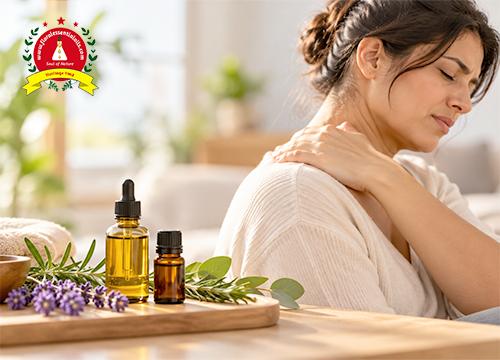
Pain is not one thing, so no single oil fits every ache. This guide sorts essential oils for pain by where it hurts and why: headache, sore muscles, stiff joints, back, nerves, feet, bruises and period cramps. For each one, you get the oils worth trying, how to apply them, and when to stop and call a doctor instead.
Key takeaways
- Match essential oils for pain to the pain type. Cooling oils suit headaches, while warming oils suit stiff muscles and joints.
- Peppermint on the temples has the best evidence of any oil here, mainly for tension-type headache.
- Most pain blends work at 2–3% on the body and 1% on the face. Always patch test first.
- Wintergreen is the strongest-feeling oil, but it is toxic if swallowed. Avoid it with blood thinners and never use it on children.
- Oils may ease discomfort and help you relax. However, they do not heal nerves, bones or injuries on their own.
- See a doctor for severe, sudden, worsening or long-lasting pain, and for numbness or a suspected fracture.
How essential oils for pain work, and where they stop
Essential oils are concentrated plant extracts, and a few of their compounds act directly on the skin. For example, menthol in peppermint triggers cold receptors, so the area feels cool and the ache seems quieter. Similarly, wintergreen and camphor-rich rosemary create warmth. This counterirritant effect works because a new sensation competes with the pain signal.
There is also a second route. Scent reaches the brain areas that handle mood and stress. As a result, calming oils such as lavender may help you relax, and tension makes most pain feel worse. In addition, the massage itself adds warmth and comfort.
What the research actually says
The honest picture is mixed. Small studies suggest aromatherapy massage may lower pain scores for some people. However, many trials are short and small. The US National Center for Complementary and Integrative Health gives a fair overview of aromatherapy research. In short, treat essential oils for pain as comfort and support, not as a replacement for medical care.
For our all-round favourites, see our shortlist of all-purpose pain relief oils.
Essential oils for pain: a quick chart by pain type
Use this chart as your starting map. First, find your pain type. Next, pick one or two oils from that row. Finally, follow the method and dilution shown, because strength matters as much as choice.
| Pain type | Oils to try | How to apply | Body dilution |
|---|---|---|---|
| Tension headache | Peppermint, lavender, Roman chamomile | Dab on temples and forehead; inhale | 2–3% (face area, keep from eyes) |
| Migraine support | Lavender (inhaled), peppermint | Inhale from a tissue; cool compress on neck | Inhalation first; 1–2% on skin |
| Sore muscles | Marjoram, black pepper, rosemary, lavender | Massage after activity or a warm bath | 2–3% |
| Muscle cramps | Marjoram, lavender, Roman chamomile | Slow massage and gentle stretch | 2–3% |
| Joint stiffness | Ginger, frankincense, black pepper, rosemary | Warm compress, then massage around the joint | 2–3% |
| Back pain | Rosemary, ginger, eucalyptus, marjoram | Massage by a partner; warm pack | 2–3% |
| Nerve pain and neuropathy | Lavender, geranium, Roman chamomile, helichrysum | Very light massage; foot soak | 1–2% |
| Heel and plantar pain | Peppermint, eucalyptus, lavender, lemongrass | Arch massage; cold bottle roll | 2–3% |
| Bruises and sprains | Helichrysum, lavender, cypress | Cool compress first, then light massage | 1–2%, unbroken skin only |
| Menstrual cramps | Clary sage, marjoram, lavender, geranium | Circular belly massage; warm water bottle | 2% |
Headache and migraine: peppermint leads the evidence
Headache is the pain type where essential oils for pain have the strongest support. In small controlled trials, peppermint oil on the forehead and temples eased tension-type headache better than a placebo. In one, it did about as well as a common over-the-counter pain reliever. Still, the studies were small and used prepared solutions.
How to apply peppermint oil for headache relief
- Mix 3 drops of peppermint oil into 5 ml (one teaspoon) of a carrier oil. That gives roughly a 3% blend.
- Dip a fingertip in the blend and dab it across the forehead and both temples. Also try the back of the neck.
- Keep well away from the eyes, and wash your hands straight after. Menthol vapour stings eyes quickly.
- Rest for 15 minutes in a quiet room. If needed, repeat once after 30 minutes.
For a gentler option, inhale one drop of lavender from a tissue. Roman chamomile also suits people who find peppermint too sharp. For roll-on recipes, see our guide on using peppermint oil for headache relief.
Migraine: go softer, and mostly by smell
During a migraine, many people are sensitive to smell, so a strong oil can make things worse. Therefore, try one drop of lavender on a tissue held at a distance, plus a cool cloth on the neck. However, oils do not replace migraine medicine.
Do not use peppermint or eucalyptus on or near the face of children under 6. Their menthol and cineole content can affect breathing in small children.
Sore muscles, aches and muscle cramps
Muscle soreness usually follows hard work, a new workout or long hours in one position. Here, warming and relaxing essential oils for pain make the most sense. Sweet marjoram is a traditional favourite for tight muscles, while black pepper and ginger add gentle warmth. Also, slow, firm massage strokes matter as much as the oil. For more options, our guide to ten oils for aching muscles goes oil by oil.
A simple sore-muscle massage blend
Mix 6 drops marjoram, 4 drops lavender and 3 drops black pepper into 30 ml sweet almond or sesame oil. That is about 2%. Then massage toward the heart for five to ten minutes. In cold weather, sesame feels especially comforting, as our guide to the best oils for a winter body massage explains.
Essential oils for muscle cramps
A cramp is a sudden, hard contraction, often in the calf. First, stretch the muscle gently. Next, massage in a 2% marjoram and lavender blend. Marjoram is a traditional calming oil for spasms, as our marjoram oil benefits guide explains. Also drink water, because dehydration makes cramps more likely.
Joint and back pain: warming essential oils for pain and stiffness
Stiff joints and a sore back both tend to feel better with warmth and gentle movement. As a result, warming oils lead here: ginger, black pepper, camphor-type rosemary and frankincense.
Joint pain and arthritis support
For achy knees or hands, apply a warm compress first. Then massage a 2–3% ginger and frankincense blend around the joint, not hard into it. Frankincense research mostly uses oral resin extracts, so treat the oil as a grounding comfort. If a joint is hot, red or swollen, skip massage and get it checked.
Back pain: upper and lower back
Back pain often comes from posture, lifting or long sitting. A partner massage with rosemary, ginger and marjoram can loosen the muscles along the spine. Then add a warm pack. Our article on oils for lower and upper back pain includes more recipes and stretches.
What is the strongest essential oil for pain?
The strongest-feeling oils are wintergreen, rich in methyl salicylate, and peppermint, rich in menthol. Clove bud is also intense. However, strongest does not mean best. Stronger oils irritate more easily, so they need lower dilutions and more care.
Wintergreen is almost pure methyl salicylate, a relative of aspirin. It is toxic if swallowed, even in small amounts. Do not use it with blood thinners, with aspirin allergy, in pregnancy or on children. On adult skin, keep it at 2% or lower on a small area.
Nerve pain and neuropathy: gentle, realistic support
Nerve pain is where essential oils for pain need the most realistic expectations. It often feels like burning, tingling or pins and needles in the feet and hands. Neuropathy has many causes, including diabetes and vitamin deficiency. Therefore, a diagnosis comes first.
Essential oils fit mainly as comfort. Light massage and calming aromas may make discomfort easier to live with. However, no oil has been shown to repair or regenerate nerves in people.
Five oils people most often reach for
- Lavender: soothing and well tolerated.
- Geranium: traditional in foot and hand blends.
- Roman chamomile: mild, ideal for sensitive skin.
- Helichrysum: prized for soothing blends.
- Peppermint: brief cooling for burning feet.
You may also see copaiba suggested, although its research is still early. Our article on choosing oils for nerve discomfort compares these options.
Numb skin may not feel irritation or heat. So use 1% dilution, avoid heat packs and check your feet daily. With diabetes, ask your care team first.
Foot pain and plantar fasciitis
Plantar fasciitis causes sharp heel pain, usually worst with the first morning steps. Essential oils cannot fix the strained tissue. However, they make daily stretching and massage more pleasant, and that routine is what tends to help.
Plantar fasciitis essential oil blend recipe
- 15 ml fractionated coconut oil or sweet almond oil
- 3 drops peppermint
- 2 drops lavender
- 2 drops eucalyptus or lemongrass
This makes roughly a 2–3% blend. Massage it into the arch with your thumbs, then roll your foot over a chilled bottle. For more ideas, read our guide to the best oils for plantar fasciitis heel pain.
For feet that swell after a long day, raise your legs and use light, upward strokes with cypress or lavender. Our article on calming tired, swollen feet has more.
Bruises, sprains and broken bones: after-injury comfort
After a knock or twist, the first 48 hours are about rest, ice, compression and elevation. Oils come later, and only on unbroken skin. Then a light 1–2% helichrysum and lavender massage around a bruise may feel soothing. Our guide to soothing bruises with essential oils covers compress methods.
Essential oils for broken bones: what is realistic
To be clear, a broken bone needs medical care, and no essential oil regenerates bone. Still, once your doctor agrees, oils can support comfort in recovery. For example, lavender may help with sleep. Never apply oils under a cast, over stitches or on an open wound. Our article on oils during bone fracture recovery explains more.
Menstrual cramps: massage and warmth
Several small studies suggest aromatherapy belly massage may ease period cramps more than plain carrier oil. Clary sage, marjoram, lavender and geranium appear most often.
To try it, blend 3 drops clary sage, 2 drops marjoram and 1 drop lavender into 15 ml of carrier oil. Then massage in slow clockwise circles and rest with a warm water bottle. If your cycle brings mood changes too, see our article on oils for hormonal balance.
Avoid clary sage, rosemary, wintergreen and sage in pregnancy. Also see a doctor if periods are very painful, heavy or suddenly different.
How to use essential oils for pain safely
Essential oils are potent, so more is not better. In fact, strong blends raise the risk of lasting skin sensitisation. Here are the main ways to apply essential oils for pain, with the right strength for each.
| Method | Best for | How much | Tip |
|---|---|---|---|
| Massage oil | Muscles, back, joints, cramps | 2–3% = 12–18 drops per 30 ml carrier | Warm it in your hands first |
| Roll-on | Temples, neck, heels | 2–3% = 6–9 drops per 10 ml | Handy for work and travel |
| Compress | Joints, bruises, belly | 3–4 drops in a bowl of water | Cool for new injuries, warm for stiffness |
| Bath | Whole-body aches | 5–6 drops mixed in 1 tbsp carrier oil | Never drop oils straight into water |
| Inhalation | Headache, migraine, tension | 1–2 drops on a tissue | Take slow breaths for a minute |
| Children 6+ | Mild aches only | 0.5–1% = 3–6 drops per 30 ml | Skip peppermint and wintergreen |
Choose a carrier oil
Sweet almond and sesame give a good glide for massage. Meanwhile, light fractionated coconut suits roll-ons, and jojoba keeps well for ready-made blends.
Safety checklist
- Patch test on your inner forearm and wait 24 hours.
- Never swallow essential oils, and keep bottles away from children.
- Keep away from eyes, inner nose and broken skin.
- Sun caution: cold-pressed bergamot, lemon, lime and grapefruit can burn skin in sunlight for 12 hours.
- Pregnancy and children under 2: skip topical use unless a professional advises it.
- Medicines: ask your pharmacist if you take blood thinners or have epilepsy or asthma.
- Pets: cats are very sensitive, so do not diffuse near them.
When to see a doctor about pain
Essential oils for pain suit everyday aches. However, some pain needs prompt medical help, such as:
- A sudden, severe headache, or a headache with fever, a stiff neck, confusion or vision changes
- Chest pain, or pain spreading to the arm or jaw
- Numbness, weakness, or loss of bladder or bowel control with back pain
- A possible fracture, deformity, or a joint you cannot bear weight on
- Pain that lasts more than a few weeks or keeps getting worse
- New burning or tingling in the feet, especially with diabetes
Used this way, essential oils for pain become part of a wider plan, not a substitute for it.
Frequently asked questions
What is the strongest essential oil for pain?
Wintergreen feels the strongest because it is rich in methyl salicylate, followed by menthol-rich peppermint. However, stronger oils irritate skin more easily. Wintergreen is also toxic if swallowed and unsuitable with blood thinners, in pregnancy or for children. For most aches, marjoram, lavender or peppermint at 2–3% is a safer start.
How do you apply peppermint oil for headache relief?
Mix 3 drops of peppermint oil with one teaspoon of carrier oil. Then dab a little on your forehead, temples and the back of your neck. Keep it away from your eyes and wash your hands afterwards. Rest for 15 minutes. Do not use peppermint on the face of children under 6.
What are the 5 best oils for nerve damage?
Lavender, geranium, Roman chamomile, helichrysum and peppermint are the oils people use most for nerve discomfort. They may soothe the skin and make discomfort easier to live with. However, no essential oil has been shown to repair nerve damage. Use them at 1–2%, and get a diagnosis first.
Which essential oils help with muscle pain and cramps?
Sweet marjoram, lavender, black pepper, rosemary and Roman chamomile are popular choices. Blend them at about 2%, which is 12 drops per 30 ml of carrier oil. Then massage slowly toward the heart. For a cramp, stretch the muscle gently first, and drink enough water.
What is the best essential oil for back pain?
Rosemary, ginger, marjoram and eucalyptus are the most common choices. Warming oils suit a stiff lower back, while marjoram helps tight shoulders relax. Blend two of them at 2–3% in sweet almond or sesame oil. See a doctor if back pain comes with numbness, weakness or fever.
Can essential oils help broken bones heal faster?
No. No essential oil makes bones heal faster, and a fracture always needs medical care. Once your doctor agrees, oils can support comfort during recovery. For example, lavender may help you relax and sleep. Never apply oils under a cast, over stitches or on broken skin.
Are essential oils for pain safe to use every day?
Most adults can use a properly diluted blend daily for short periods. Keep body blends at 2–3% and take breaks every few weeks to lower the risk of sensitisation. Stop if you notice redness or itching. Ask a doctor first if you are pregnant or take regular medicines.
Build your own pain-relief blend
Floral Essential Oils has supplied aromatic oils from Kannauj since 1962. Every oil here comes in nine pack sizes, from 250 ML up to 25 L for spas and therapists.
This article is for educational purposes only and is not medical advice. Essential oils are not intended to diagnose, treat, cure or prevent any disease. Always consult a qualified healthcare professional about pain, especially if it is severe, sudden or long-lasting. For external use only when properly diluted; do not swallow. Keep out of reach of children and pets.
 Chat with us !