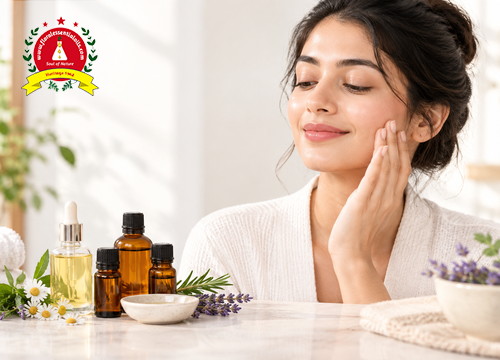
Essential oils for skin can be a lovely, natural part of a routine, but only when you match the oil to your skin and dilute it properly. This guide sorts the options by skin type and by concern, from open pores and dark spots to stretch marks and tattoo aftercare. In addition, it covers safe dilution, patch testing and the citrus sun rule.
Key takeaways
- Never apply essential oils neat to your face. Keep facial blends at about 1% (roughly 2 drops per 10 ml of carrier) and body blends at about 2%.
- Choose by skin type first: light, herbal oils for oily skin and gentle florals for dry or sensitive skin.
- Cold-pressed bergamot, lemon, lime and grapefruit are phototoxic. Use bergapten-free versions, keep them for wash-off products, or wait 12 hours before sun.
- Patch test every new blend on your inner forearm for 24 to 48 hours.
- The carrier oil makes up 98 to 99% of a blend, so choose it with care.
- Essential oils may support skin comfort and appearance, but they do not treat skin disease.
How essential oils work on skin (and what they cannot do)
An essential oil is a concentrated blend of aromatic compounds from a plant. Distillers need a large quantity of flowers, leaves or roots to fill a small bottle. That is why a few drops go a long way, and why too many drops can irritate.
On skin, essential oils mainly offer three things. First, a pleasant aroma makes a routine feel calming. Second, some oils, such as tea tree, show antimicrobial activity in small studies. Third, several oils are traditionally used to support a clearer, more even look.
However, they do not replace sunscreen, acne treatment or medical care. Research on most skin uses is still limited. For a balanced overview of the science, the NIH National Center for Complementary and Integrative Health is a good, neutral starting point.
Use essential oils externally only. Do not swallow them, keep them away from your eyes, and store them away from children and pets. Cats are especially sensitive to essential oils.
Dilution and patch testing: the safety basics
Most bad reactions come from two mistakes: using oils undiluted, or skipping a patch test. Fortunately, both are easy to avoid.
How much essential oil to use
Facial skin is thin and reactive. As a result, keep face blends at about 1%, or 0.5% for sensitive skin. Body blends can usually go to 2%. For children over six, stay between 0.5 and 1%, and avoid most essential oils on babies under two.
How to patch test a new blend
Even a well-diluted oil can disagree with your skin. So test every new blend, and test again if you change the oil.
- Mix at the real strength. Blend the oil at the dilution you plan to use, for example 1% for a face oil.
- Apply a small amount. Rub a coin-sized dab on your inner forearm.
- Wait 24 to 48 hours. Do not wash the area, and watch for redness, itching or burning.
- Decide. If skin reacts, wipe on plain carrier oil, wash gently and stop. If it stays calm, start slowly on your face.
Finally, freshness matters. Lavender, tea tree and citrus oils can oxidize once opened, and oxidized oil irritates more easily. So keep bottles closed, cool and dark.
Essential oils for skin by skin type
Your skin type decides two things: which essential oil suits you, and which carrier oil it should sit in. So notice how your skin behaves for a day. Does it shine by noon, feel tight, or sting easily?
Oily and acne-prone skin
Oily skin usually prefers light carriers and fresh, herbal oils. Tea tree is the best known, and small studies suggest tea tree gels may reduce mild spots, although slowly. Clary sage and geranium are also traditionally used.
In addition, choose jojoba over heavy coconut oil. Jojoba is a liquid wax that resembles skin’s own sebum.
Dry and dehydrated skin
Dry skin needs richer carriers that help reduce water loss. Avocado, sweet almond and argan oil are good examples. Then add soft, gentle essential oils such as lavender, sandalwood or Roman chamomile at 1%.
However, oil does not add water. So apply face oil over damp skin to seal moisture in.
Sensitive and reactive skin
Sensitive skin should start low, at 0.5%, or with a floral water only. Roman and German chamomile are traditionally chosen for calming blends.
Also skip “hot” oils such as clove, cinnamon and peppermint on the face.
Mature skin
Mature skin tends to be drier and thinner, so it suits rich carriers such as rosehip. See the full section below.
Essential oils for skin concerns: quick-reference table
Use this table as a starting point. Pick one or two oils, because simple blends are easier to patch test.
| Skin concern | Essential oils to consider | Carrier or base | Dilution |
|---|---|---|---|
| Open pores, oily shine | Tea tree, clary sage, geranium | Jojoba | 1% face |
| Blemish-prone skin | Tea tree, lavender | Jojoba | 1% face; 2% as a dab on spots |
| Dark spots, uneven tone | Carrot seed, frankincense, sandalwood | Rosehip | 1% (no cold-pressed citrus by day) |
| Dullness, lack of glow | Neroli, palmarosa, geranium | Apricot kernel | 1% |
| Fine lines, sagging | Frankincense, rose, helichrysum, vetiver | Rosehip or argan | 1% |
| Dry, flaky skin | Lavender, Roman chamomile, sandalwood | Avocado, sweet almond | 1% face, 2% body |
| Sensitive, reactive skin | Roman or German chamomile | Jojoba or a floral water | 0.5% or none |
| Stretch marks | Lavender, neroli, helichrysum | Apricot kernel, sweet almond | 2% body (carrier only in pregnancy) |
| Healed scars | Helichrysum, frankincense | Rosehip | 1% |
| Tattoo aftercare | None while healing; lavender once fully healed | Argan or jojoba | 0% until healed, then 1% |
| Sun-exposed skin | Lavender, Roman chamomile, carrot seed | Avocado | 1%, never on a fresh burn |
| Dark elbows and knees | Sandalwood, lavender | Coconut or sweet almond | 2% |
Open pores, oily skin and breakouts
Pores do not open and close like doors. Instead, they look larger when they fill with oil or when skin loses firmness. So aim for clean, balanced skin.
Which essential oils help with open pores?
Tea tree, clary sage and geranium are the oils most often used for pores. For example, a simple night serum is 10 ml of jojoba with 1 drop of tea tree and 1 drop of geranium. Our guide to the 7 top essential oils for open pores compares each option in more depth.
Clary sage is traditionally used for oily skin, and many people prefer its softer scent. However, avoid it in pregnancy.
Does tea tree oil clog pores?
Tea tree essential oil itself is a light, volatile oil, so it is unlikely to clog pores. The carrier is the bigger question. Heavy oils, such as coconut, can feel congesting on oily skin, while jojoba and similar light oils usually do not. We look at this closely in does tea tree oil shrink pores.
What about clove oil for acne? It is strongly antimicrobial in lab tests, but it is also very irritating. Therefore, tea tree is a far gentler choice.
Painful cysts, scarring or stubborn acne need a dermatologist. Also, some acne medicines already make skin more sensitive.
Dark spots, uneven tone and dullness
Dark spots usually come from sun, old blemishes or hormones. Because sun keeps triggering pigment, daily sunscreen matters most. Essential oils can then support a gentle night routine.
Essential oils traditionally used for an even tone
Carrot seed, frankincense, sandalwood and rose are traditionally used in blends for uneven tone. For example, try 10 ml of rosehip oil with 1 drop of carrot seed and 1 drop of frankincense, applied at night. Our full guide to essential oils for dark spots on skin goes through each oil and a routine.
Lemon often appears in brightening recipes. However, cold-pressed lemon is phototoxic, as the sun section explains.
Dullness and glow
Dull skin often needs gentle exfoliation and hydration first. After that, neroli, palmarosa and geranium add a fresh, floral lift to a face oil. If radiance is your main goal, read our step-by-step guide to using essential oils to brighten skin and restore glow.
Dark elbows and knees
Can coconut oil lighten elbows? It softens rough, dry skin, so elbows may look less ashy and dark. It does not bleach pigment, however. Pair it with gentle exfoliation, as shown in our guide to essential oils for dark elbows and knees.
Mature skin, fine lines and sagging
With age, skin makes less collagen and oil, so it feels drier and thinner. No oil reverses this. Still, a nourishing routine may help skin look smoother.
The best essential oils for mature skin
Frankincense, rose otto, helichrysum and vetiver are classic choices for a night serum. For instance, mix 15 ml of rosehip or argan with 2 drops of frankincense and 1 drop of rose otto.
Vetiver is less well known in skin care. Read more in how to include vetiver in your skincare routine.
Can essential oils tighten saggy skin?
Honestly, oils cannot lift sagging skin. However, facial massage with a good oil may help skin look firmer for a while. Our guide to essential oils for saggy skin lists eight options and a simple upward massage technique. Also, UV light drives sagging, so wear sunscreen.
Essential oils for skin marks: stretch marks, scars and tattoos
Established marks rarely disappear. However, regular massage keeps skin supple and may soften how marks look over time.
Stretch marks
Stretch marks form when skin stretches faster than it can adapt. Fresh, pink marks respond better than old, silvery ones. Our guide to essential oils for stretch marks covers more options.
A simple body blend is 30 ml of apricot kernel or sweet almond oil with 6 drops of lavender and 6 drops of neroli, which is about 2%. Massage it in daily.
During pregnancy, use a plain carrier oil, such as apricot kernel or sweet almond, for belly massage. Avoid essential oils in the first trimester, and ask your midwife or doctor before using any later. Skip clary sage and sage entirely.
Healed scars
Once a wound has fully closed, helichrysum and frankincense in rosehip oil are traditionally used to massage scars. Never apply oils to open cuts or fresh burns.
Tattoo aftercare
A new tattoo is an open wound, so follow your artist’s aftercare first. Keep essential oils off it until fully healed. Our guide to essential oils and new tattoos explains what to use at each healing stage.
For moisture, a plain, light oil such as argan works well, as covered in is argan oil good for tattoos. After healing, daily sunscreen does more than any oil to stop colors fading.
Sun-exposed skin and the citrus phototoxicity rule
This is the key safety rule in this guide. Some citrus oils contain bergapten, which reacts with UV light. As a result, they can cause burns or dark patches that last for months.
Which oils are phototoxic?
The main ones are cold-pressed (expressed) bergamot, lemon, lime, grapefruit and bitter orange. In contrast, sweet orange, mandarin and steam-distilled lemon or lime are generally not considered phototoxic. The extraction method matters, and our comparison of cold-pressed and steam-distilled essential oils explains why.
With cold-pressed bergamot, lemon, lime or grapefruit, choose one of three safe paths. Use a bergapten-free (FCF) version, keep the oil for wash-off products such as cleansers, or wait at least 12 hours before sun or tanning beds on that skin.
Caring for skin after sun exposure
Essential oils are not sunscreen, and they do not repair sunburn. Cool a fresh burn with water, then wait for redness to settle before using any oil.
Later, gentle oils such as lavender, Roman chamomile and carrot seed in avocado oil may help dry, sun-exposed skin feel comfortable again. Our article on essential oils for sun-damaged skin shares more ideas. However, see a doctor for blistering, a burn over a large area, fever, or any mole that changes.
Carrier oils and floral water toners
The carrier makes up most of a blend, so choose it with care. In addition, floral waters (hydrosols) make gentle, alcohol-free toners for sensitive skin.
Matching a carrier to your skin
- Oily skin: jojoba.
- Dry skin: avocado, sweet almond or argan.
- Mature skin: rosehip and argan.
- Body massage: apricot kernel and sweet almond.
For a fuller comparison of textures and uses, see our guide to carrier oils for skincare. Note that sweet almond and apricot kernel come from nuts and kernels, so avoid them if you have a nut allergy.
Floral waters as toners
A floral water is the aromatic water left after steam distillation. As a result, it is far gentler than essential oil.
Rose water suits dry, mature and even oily skin, because it hydrates without oil. Neroli water freshens dull skin, and clary sage water suits oily skin. Mist it on after cleansing, then press in your face oil. Keep opened floral waters in the fridge.
Frequently asked questions
Can I put lavender oil on my face?
Yes, as long as you dilute it. Mix about 2 drops of lavender essential oil into 10 ml of a carrier such as jojoba, which gives a 1% blend. Patch test on your forearm for 24 to 48 hours first. Avoid the eye area, and stop if you notice redness or stinging.
Can I put lavender oil directly on my skin?
It is best not to. Applying any essential oil neat, including lavender, raises the risk of irritation and long-term sensitization, even if it feels fine at first. Instead, dilute lavender to about 1% for the face and 2% for the body in a carrier oil. For very sensitive skin, start at 0.5% or use a floral water.
Does tea tree oil clog pores?
Tea tree essential oil is light and volatile, so it is unlikely to clog pores on its own. The carrier oil matters more. Heavy oils such as coconut may feel congesting on oily skin, whereas jojoba is usually well tolerated. Keep tea tree at about 1% for the face and always patch test first.
Can coconut oil lighten dark elbows?
Coconut oil does not bleach pigment. However, it softens rough, dry skin, so elbows and knees often look less ashy with regular use. Also exfoliate gently twice a week. If darkening appears suddenly or feels velvety, see a doctor, because it can signal a health issue.
What essential oils are good for psoriasis and eczema?
The evidence for essential oils in psoriasis and eczema is weak, and damaged skin reacts more easily. Plain, fragrance-free emollients are usually the safer choice. If you still want to try an oil, ask your dermatologist first, keep the dilution very low, and never apply oils to cracked, weeping or broken plaques.
What is the best oil for tattoos?
While a tattoo is healing, follow your artist’s aftercare advice and avoid essential oils. Once peeling has passed, a plain, light carrier such as argan or jojoba keeps skin soft. After full healing, a 1% lavender blend suits most people, and daily sunscreen protects the colors.
Which essential oils help stretch marks?
Lavender, neroli and helichrysum are traditionally used in stretch mark blends at about 2% in apricot kernel or sweet almond oil. Regular massage may help skin stay supple, and fresh marks respond better than old ones. During pregnancy, use a plain carrier oil and check with your midwife or doctor before adding any essential oil.
Build your own skin-care blend
From Kannauj, home of traditional copper-vessel distillation, we have made and exported oils since 1962. Every oil comes in nine pack sizes, from 250 ML to 25 L.
This article is for educational purposes only and is not medical advice. Consult a qualified healthcare professional or dermatologist before using essential oils, especially if you are pregnant, breastfeeding, have a skin condition or take medication. Essential oils are for external use only and must be diluted before applying to skin.
 Chat with us !