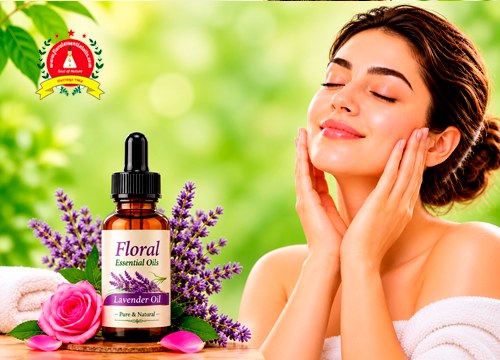
Skincare routines are moving towards natural ingredients and botanical extracts. Among these, essential oils for skincare stand out for their distinctive aromas and wide range of cosmetic uses. However, picking the right oil means understanding its character, its purpose and its safety limits.
In short, essential oils are concentrated plant extracts. Specifically, they come from flowers, leaves, roots, seeds, resins and fruit peels. For example, rose oil is prized in luxury floral formulations, while lavender oil adds a soft, fresh botanical note.
In this guide, we explore seven popular essential oils for skincare, their cosmetic uses and simple ways to bring them into your beauty routine.
Key takeaways
- Essential oils are concentrated aromatic extracts, so they must always be diluted before they touch the skin.
- Lavender, rose, tea tree, geranium, frankincense, chamomile and rosemary are the most popular skincare oils.
- Carrier oils such as jojoba and sweet almond form the base of most skin blends.
- Choose oils by skin type, product type and application area, not by scent alone.
- Always patch test a new blend and avoid the eye area.
Understanding Essential Oils for Skincare
Essential oils are concentrated aromatic extracts taken from different parts of plants. Producers usually extract them by steam distillation. Citrus oils, on the other hand, are often cold pressed from the peel.
Today, these oils appear in many cosmetic and personal care products, including:
- Facial oils and beauty blends
- Creams and moisturisers
- Cleansers and face washes
- Body lotions and massage oils
- Soaps and bath products
- Hair and scalp care formulations
Their fragrance and botanical character make them useful across many beauty applications. However, essential oils are not the same as carrier oils. In fact, essential oils are highly concentrated and aromatic. Carrier oils, in contrast, are fixed vegetable oils that form the base of most skin blends.
Above all, knowing this difference helps you choose each ingredient for the right job.
7 Popular Essential Oils for Skincare
In fact, many essential oils are used in natural skincare and cosmetic products. However, each one has its own aroma, botanical origin and formulation profile. So, here are seven of the most popular choices.
1. Lavender Essential Oil
Lavender essential oil has a fresh, soft and floral-herbal aroma. As a result, it is one of the most widely used oils in personal care and cosmetic products.
Common cosmetic uses:
- Body lotions and creams
- Bath and shower products
- Massage oil blends
- Scented skincare products
- Handmade soaps
Lavender also suits aromatic beauty routines. Even so, always dilute it properly before topical use.
2. Rose Essential Oil
Rose essential oil is valued for its rich, delicate and elegant floral fragrance. For this reason, it is a favourite in premium beauty and personal care ranges.
Common cosmetic uses:
- Facial oil blends
- Luxury creams and lotions
- Body oils
- Facial massage blends
- Premium soaps and beauty products
Above all, rose oil is especially useful for brands building floral-inspired skincare collections.
3. Tea Tree Essential Oil
Tea tree essential oil has a fresh, sharp and herbaceous aroma. For this reason, it is often used in personal care products made for oily and blemish-prone skin.
Common cosmetic uses:
- Facial cleansers
- Cosmetic soaps
- Body washes
- Selected facial care products
- Personal care formulations
However, tea tree oil needs careful formulation. In high concentrations, it may cause skin irritation or sensitisation.
4. Geranium Essential Oil
Geranium essential oil is known for its sweet, rosy and slightly green fragrance. Consequently, it often features in botanical beauty products and floral skincare blends.
Common cosmetic uses:
- Facial oil blends
- Body lotions
- Massage oils
- Natural fragrance products
- Handmade soaps
Geranium also pairs well with rose and lavender. Still, test every combination for skin compatibility.
5. Frankincense Essential Oil
Frankincense essential oil has a warm, woody and resinous aroma. Traditionally, it has been prized in perfumery and aromatic personal care products.
Common cosmetic uses:
- Facial oil formulations
- Body oils
- Premium creams
- Massage blends
- Natural fragrance products
Because of its rich scent, frankincense works well in premium botanical beauty collections.
6. Chamomile Essential Oil
Chamomile essential oil has a soft, sweet and herbal aroma. In addition, its scent blends easily with many floral and herbal ingredients.
Common cosmetic uses:
- Body care products
- Massage oil blends
- Creams and lotions
- Botanical skincare products
- Personal care formulations
Note that Roman and German chamomile have different chemical profiles. Therefore, always confirm the botanical species before you select an oil.
7. Rosemary Essential Oil
Rosemary essential oil has a fresh, herbal and slightly woody aroma. Although it is best known for hair care, it also appears in many personal care products.
Common cosmetic uses:
- Cleansing products
- Body care formulations
- Massage oils
- Soaps and washes
- Botanical personal care products
Its strong herbal note also lifts blends that contain lavender, peppermint and other aromatic oils.
How to Choose Essential Oils for Your Skincare Routine
Choosing an essential oil takes more than liking its scent. Instead, let your skin type, the product format and the application area guide your decision.
1. Understand your skin type
After all, different skin types have different needs. So, think about your skin before you pick any cosmetic ingredient.
- Dry skin: Look for moisturising blends built on carrier oils such as jojoba and sweet almond.
- Oily skin: Choose lightweight formulations with suitable botanical ingredients.
- Combination skin: Use balanced products that suit different areas of the face.
- Sensitive skin: Prefer fragrance-free products where possible, because essential oils may trigger irritation.
Remember, no single essential oil suits every skin type. For a deeper breakdown, read our guide to essential oils for skin by type and concern.
2. Check the quality and botanical identity
Similarly, the quality of an oil affects how it performs. Before you buy, check these details:
- Botanical name and plant species
- Country of origin
- Extraction method
- Aroma and appearance
- Batch number and documentation
- Storage and packaging conditions
As a result, these details help buyers and formulators understand exactly what they are using.
3. Consider the intended application
For example, an oil that works in a body lotion may not suit a face cream. In general, facial products need more careful ingredient choice and lower concentrations. Therefore, always consider the product type, the application area and the relevant cosmetic safety rules.
Essential Oils vs Carrier Oils in Skincare
In short, essential oils and carrier oils play different roles in skincare. Although both come from plants, their extraction, composition and uses differ.
| Feature | Essential oils | Carrier oils |
|---|---|---|
| What they are | Concentrated aromatic plant extracts | Fixed vegetable oils from seeds, nuts or kernels |
| How they are made | Mostly steam distillation or cold pressing | Mostly cold pressing or expeller pressing |
| Aroma | Strong and distinctive | Mild or almost none |
| Role in skincare | Fragrance and active botanical character | Base, texture and moisture |
| Used neat on skin? | No, always diluted | Yes, as a base |
Popular carrier oils used in skincare
Equally, carrier oils are key ingredients in many beauty and personal care products. Popular options include:
- Jojoba carrier oil: Known for its light feel in facial and body-care products.
- Sweet almond carrier oil: Common in massage oils, body oils and moisturisers.
- Grapeseed carrier oil: Valued for its light texture in facial and body formulations.
- Apricot kernel carrier oil: Often used in massage blends, creams and cosmetic oils.
- Pomegranate carrier oil: Used in specialised facial oils and premium skincare.
Finally, choose a carrier oil based on the texture, stability and feel you want in the finished product. For more options, see our complete guide to the best carrier oils for essential oils.
How to Use Essential Oils in Beauty Routines
In general, the safest way to enjoy essential oils is through properly formulated cosmetic products. So, here are the most common applications.
Facial care products
To begin with, essential oils appear in selected face creams, cleansers and facial oil blends. However, facial skin can be delicate. Therefore, formulation limits and ingredient compatibility need careful attention.
Body care and massage products
Similarly, body oils and massage blends usually combine a carrier oil with a few aromatic oils. For instance, lavender, rose and geranium are popular for floral and botanical scent profiles.
Handmade soaps and cleansers
Essential oils also add natural fragrance to handmade soaps, body washes and cleansers. Even so, the final recipe should account for the stability of each ingredient.
Natural beauty and personal care ranges
Finally, cosmetic brands often use essential oils to build botanical product collections. As a result, their scent profiles complement other ingredients and create a distinctive product experience.
Essential Oil Safety for Skincare
Of course, natural ingredients still need careful handling. Essential oils are highly concentrated, so direct use without dilution may cause irritation or sensitisation.
Therefore, follow these key precautions:
- Never apply undiluted essential oils directly to your skin.
- Follow the recommended dermal limit for each oil.
- Patch test every new blend before regular use.
- Keep essential oils away from the eyes and other sensitive areas.
- Take extra care with citrus oils, as some can cause photosensitivity.
- Do not use essential oils on broken or irritated skin.
- Consult a qualified professional if you have skin concerns or allergies.
In other words, a plant origin does not make an ingredient safe for everyone. For further guidance, see the US Food and Drug Administration’s page on aromatherapy and essential oils. You can also read our complete essential oil safety guide.
Choosing Quality Essential Oils for Cosmetic Formulations
For skincare brands and cosmetic manufacturers, ingredient selection is a vital part of product development. Above all, a good essential oil must meet your formulation needs. In addition, buyers should review the supplier’s quality documents and product specifications.
So, consider these factors when sourcing essential oils:
- Product identification: Check the botanical name, plant part and origin.
- Extraction method: Confirm whether the oil is steam distilled, cold pressed or made by another process.
- Quality documentation: Ask for technical documents such as a certificate of analysis and safety data sheet.
- Packaging: Choose packaging that protects the oil from light, heat and air.
- Supplier reliability: Work with suppliers who give consistent product information and support bulk orders.
At Floral Essential Oils, we supply a wide range of natural aromatic ingredients for brands and manufacturers. In addition, our portfolio includes essential oils, carrier oils, floral waters and other botanical ingredients.
Conclusion
In conclusion, essential oils open up a wide range of aromatic possibilities for skincare and beauty products. From the floral richness of rose to the herbal freshness of rosemary, each oil brings something different.
However, the right choice depends on botanical identity, quality, formulation compatibility and safe use. Whether you are building a personal routine or developing a new product, understanding essential oils helps you make better decisions.
Frequently asked questions
Which essential oils are commonly used in skincare?
Lavender, rose, tea tree, geranium, frankincense, chamomile and rosemary are the most common. However, their suitability depends on the product and the formulation requirements.
Can essential oils be applied directly to the face?
No. Essential oils are concentrated extracts and should never be applied neat. Instead, always dilute them in a carrier oil and follow the recommended dermal limits.
Are essential oils and carrier oils the same?
No. Essential oils are concentrated aromatic plant extracts. Carrier oils are fixed vegetable oils that serve as the base in skincare and massage blends.
Which carrier oils are popular in skincare?
Jojoba, sweet almond, grapeseed, apricot kernel and pomegranate carrier oils are popular choices for many cosmetic applications.
How should essential oils be stored?
Keep them in tightly closed, dark glass containers. Also, store them away from sunlight, heat and moisture, and follow the supplier’s storage advice.
Source pure oils for your skincare range
Explore our range of essential oils and carrier oils for beauty and personal care products. Every oil is available in nine pack sizes, from 250 ML to 25 L. Bulk enquiries are always welcome.
This article is for educational purposes only and is not medical advice. Consult a qualified healthcare professional or dermatologist before using essential oils, especially if you have sensitive skin, allergies or a skin condition.
 Chat with us !