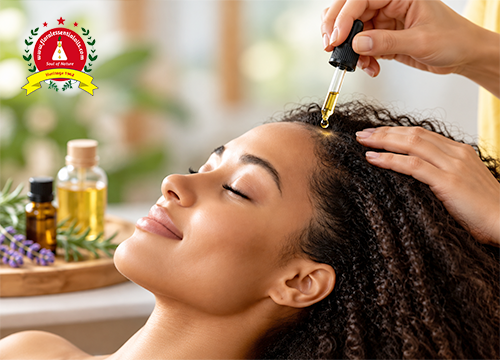
Essential oils for hair are popular for good reason: a scalp massage with a well-chosen blend feels wonderful and may support a healthier-looking scalp. This guide sorts the best options by hair goal, from growth and dandruff to frizz and shine. It also covers carriers, dilution, recipes and extra care for babies and kids.
Key takeaways
- Always dilute: about 2% for a scalp oil (12 drops per 30 ml of carrier) and 10 to 20 drops per 100 ml of shampoo.
- Rosemary is the best-studied hair oil, but the evidence is one small trial, not proof.
- Tea tree has the strongest evidence for mild dandruff, while olive oil only softens flakes.
- The carrier does most of the conditioning, so match it to your hair type.
- Avoid essential oils on babies under two, and keep rosemary away from young children’s faces.
- See a doctor for sudden hair loss, bald patches or a painful, scaly scalp.
What essential oils can (and cannot) do for hair
Healthy hair starts at the scalp. Essential oils mostly work there, because the hair shaft itself is not alive. For example, some oils calm itch, some freshen an oily scalp, and many simply make a massage more pleasant.
Massage itself matters, too. Regular scalp massage may boost local blood flow, and it is relaxing. So part of any benefit may come from the routine, not only from the oil.
However, keep expectations honest. No essential oil can regrow hair on a bald scalp, reverse grey hair or fix split ends for good. Research is mostly small or early, so “may help” is the right phrase. Also, hair loss can have medical causes, such as thyroid problems, iron deficiency or hormonal changes, which need a doctor.
Use essential oils on hair externally and diluted only. Keep them away from your eyes, especially when rinsing. Patch test a new blend on your inner forearm for 24 to 48 hours. If you are pregnant, ask your doctor first, and keep oils away from cats.
Essential oils for hair by hair type
Your hair type mainly decides the carrier oil. Fine hair collapses under heavy oils, while thick, curly hair drinks them up. Then the essential oil is chosen by scalp need, such as itch, oil or thinning.
| Hair and scalp type | Best carriers | Essential oils to consider | How often |
|---|---|---|---|
| Fine, straight, oily roots | Jojoba, fractionated coconut | Rosemary, cedarwood, cypress | Pre-wash, once a week |
| Normal or wavy | Sweet almond, argan | Rosemary, lavender | Pre-wash, 1 to 2 times a week |
| Thick, curly or coily | Avocado, argan, sweet almond | Lavender, ylang ylang, geranium | Pre-wash twice a week; drop of argan on ends daily |
| Dry, damaged or color-treated | Argan, avocado | Lavender, sandalwood (low dose) | Pre-wash, 1 to 2 times a week |
| Flaky or itchy scalp | Jojoba, neem (strong smell) | Tea tree, lavender | Shampoo add-in each wash |
| Sensitive scalp | Jojoba | Lavender at 1% | Once a week, after a patch test |
If you are unsure, start with jojoba. It is light, rarely greasy, and suits most scalps. After that, adjust based on how your hair feels the next day.
Essential oils for hair growth and thinning
Hair growth is the most searched hair topic, so it deserves a careful answer. Some essential oils show early promise. However, none of them is a proven treatment for hair loss.
Rosemary: the best-studied option
Rosemary gets the most attention because of one well-known 2015 study. In this small randomized trial, about 100 adults with pattern hair loss used either rosemary oil or 2% minoxidil for six months. Both groups showed a similar increase in hair count at six months, but not at three. In addition, scalp itching was more common with minoxidil. You can read the study summary on PubMed.
This is encouraging, yet it is one small trial that still needs confirming. So think of rosemary as a gentle, supportive habit, not a replacement for medical treatment. It also takes patience, because any change takes months. Our guide to rosemary oil for hair growth walks through a full routine.
Rosemary comes in chemotypes. The Moroccan cineole type is the usual choice for scalp blends, whereas the Spanish camphor type is stronger. Avoid rosemary if you have epilepsy, and ask your doctor during pregnancy.
Peppermint and cedarwood
Peppermint creates a cooling tingle that many people enjoy. Early research on it is mostly in animals, so treat it as a pleasant extra. Keep it at 1% or less, because it can sting. Cedarwood, meanwhile, is traditionally used in scalp blends with rosemary and lavender for its warm, woody scent.
Black pepper for hair
Black pepper oil is a newer trend. It is warming, and it is traditionally used to support circulation in massage blends. However, direct evidence for hair growth is very limited. Our articles on the hair health benefits of black pepper oil and how to use black pepper essential oil for hair explain how to add it safely at 0.5 to 1%.
Sudden shedding, round bald patches, hair loss with pain or redness, or thinning after pregnancy or illness all need a medical check. A doctor can test for common, treatable causes.
Dandruff and itchy scalp
Dandruff is linked to a yeast called Malassezia, which lives on everyone’s scalp and feeds on scalp oils. In some people, it triggers flaking and itch. So the aim is to calm the scalp and keep the yeast in balance.
Tea tree oil for hair and scalp
Tea tree has the best evidence here. A small 2002 placebo-controlled trial found that a 5% tea tree shampoo eased mild to moderate dandruff over four weeks. At home, add 10 to 20 drops of tea tree to 100 ml of a mild shampoo. Leave the lather on for two to three minutes, then rinse well.
For more detail, read our guides to using tea tree oil for hair and essential oils for dandruff. Lavender is a softer partner if tea tree alone feels too sharp.
Does olive oil help with dandruff?
Olive oil is a popular home remedy, and it can loosen flakes and soothe a dry, tight scalp. However, it is not antifungal. Also, because the dandruff yeast feeds on oils, heavy oils left on the scalp may make flaking worse for some people.
Therefore, use olive oil as a short pre-wash treatment of 20 to 30 minutes, then shampoo it out fully. Our article on olive oil as a dandruff remedy shares the method step by step.
Thick, yellow or greasy scales, bleeding, or flaking that spreads to the face or ears may be seborrheic dermatitis or psoriasis. A medicated shampoo or prescription is usually needed.
Oily scalp and greasy roots
An oily scalp needs balance, not stripping. Harsh daily washing can leave the scalp irritated. Instead, use a gentle shampoo and a light, fresh essential oil.
Cypress, lemongrass, rosemary and clary sage are traditionally used for oily scalps. Add 10 drops of one of them to 100 ml of shampoo. Alternatively, mist a floral water onto the roots between washes. Also, keep lemongrass low, because it can irritate sensitive skin.
Tea tree shampoos are popular for oily scalps as well. However, they refresh the scalp rather than grow hair, as we explain in does tea tree shampoo help hair growth. Cold-pressed citrus oils such as lemon can be phototoxic, so avoid them on your hairline and parting before sun exposure.
Dry, frizzy and damaged hair
Dry and damaged hair needs the carrier oil more than the essential oil. Heat styling, coloring and sun lift the outer layer of the hair, which then loses moisture and frizzes. A good oil smooths that layer down and adds slip.
Frizzy hair
For frizz, use one or two drops of argan or jojoba on damp ends after washing. You can add lavender or ylang ylang at 0.5% for scent. Our article asking do essential oils really help frizzy hair looks at what to expect.
Damaged and color-treated hair
For damage, use a richer pre-wash treatment once or twice a week. Avocado and argan are good choices. Then trim split ends, because no oil can glue them back together. See our list of essential oils for damaged hair for blend ideas.
Is fractionated coconut oil good for hair?
Yes, especially for fine hair. Fractionated coconut oil stays liquid, feels light and washes out easily. However, the fractionation process removes most of the lauric acid that makes regular coconut oil so conditioning. So it works best as a light carrier and finishing oil. Read more in our guide to fractionated coconut oil for hair and skin, and compare other bases in four carrier oils for your hair.
Shine, scent and grey-hair myths
Lavender oil for hair
Lavender is one of the most searched hair oils. It is gentle, it smells calming, and it is traditionally used in scalp blends for itch and dryness. Also, early animal research has explored it for hair growth, although human evidence is lacking. Add 2 to 3 drops to 10 ml of carrier for a massage, or 10 drops to 100 ml of shampoo. Our guide to the benefits of lavender oil for hair covers more ways to use it.
Shine and scent
Shine comes from a smooth hair surface, so a drop of argan on the ends does most of the work. Ylang ylang and geranium add a floral scent, and they are traditionally used in hair oils in Southeast Asia. Cardamom also appears in some traditional hair recipes, mostly for its sweet, spicy aroma.
Can essential oils reverse grey hair?
No. Grey hair mainly depends on genetics and age, because the hair follicle gradually makes less pigment. No oil has been shown to restore color. However, early or sudden greying can sometimes link to health issues, such as low vitamin B12 or thyroid problems. So mention it to your doctor.
How to use essential oils for hair: dilution rules and recipes
Scalp skin is fairly tough, yet it still reacts to neat oils. Therefore, every recipe below stays within safe, simple limits. Remember that 1 ml is roughly 20 drops.
The shampoo add-in rule
Add 10 to 20 drops of essential oil per 100 ml of mild shampoo, which is roughly 0.5 to 1%. Shake well before each use, because oils separate. In addition, mix only a small bottle at a time so the blend stays fresh.
Pre-wash scalp oil recipe
This simple 2% blend suits most adults with normal hair:
- 30 ml carrier, such as 20 ml sweet almond and 10 ml jojoba
- 6 drops rosemary (cineole type)
- 3 drops lavender
- 3 drops cedarwood
A 5-minute scalp massage routine
- Section your hair. Part dry hair into four sections so you can reach the scalp.
- Apply the oil. Use a dropper to put a few drops along each parting, using about 1 teaspoon in total.
- Massage in circles. Use the pads of your fingers, not your nails, and work from the hairline to the crown.
- Finish at the nape. Press gently at the base of the skull for a minute, then comb any leftover oil through the lengths.
Essential oils for hair on babies and kids
Many parents ask whether rosemary oil is safe for a baby’s hair. Children’s skin is thinner, and they breathe in aromas more strongly. Therefore, extra care is essential.
- Under 2 years: skip essential oils. A little plain carrier oil, such as jojoba, is enough for cradle-cap-prone or dry scalps.
- 2 to 6 years: ask your pediatrician first. If they agree, use gentle oils such as lavender at 0.25 to 0.5%.
- 6 years and up: gentle oils at 0.5%, patch tested first.
Oils rich in 1,8-cineole, such as rosemary and eucalyptus, should never go on or near a young child’s face, because they may affect breathing. Our article on rosemary oil for a baby’s delicate hair explains the options in more detail. However, always follow your pediatrician’s advice, especially for eczema, cradle cap or hair loss in children.
Frequently asked questions
Is rosemary oil safe for babies’ hair?
Rosemary essential oil is not recommended for babies under two. It is rich in 1,8-cineole, which may affect breathing in young children when used on or near the face. For a baby’s dry scalp, a little plain carrier oil such as jojoba is enough. For older children, ask your pediatrician before using any essential oil.
Is fractionated coconut oil good for hair?
Yes, especially for fine or oily-prone hair. Fractionated coconut oil stays liquid, feels light and rinses out easily, so it works well as a carrier and finishing oil. However, it lacks most of the lauric acid in regular coconut oil, so it conditions less deeply. Thick, dry hair may prefer argan or avocado.
Does olive oil help with dandruff?
Olive oil can loosen flakes and soothe a dry, tight scalp, but it is not antifungal. Because the dandruff yeast feeds on scalp oils, heavy oils left on for long may worsen flaking in some people. Use it as a 20 to 30 minute pre-wash, shampoo it out well, and try a tea tree shampoo add-in.
Is black pepper good for hair growth?
Black pepper oil is warming and is traditionally used in circulation-style massage blends. However, there is very little direct evidence that it grows hair. If you want to try it, keep it at 0.5 to 1% in a carrier oil, patch test first, and pair it with better-studied oils such as rosemary.
How do I use lavender essential oil for hair?
Mix 2 to 3 drops of lavender into 10 ml of a carrier such as jojoba, massage it into your scalp, and leave it for 30 to 60 minutes before shampooing. Alternatively, add 10 drops to 100 ml of mild shampoo. Lavender is gentle, calming and traditionally used for dry, itchy scalps.
How do I use tea tree oil for hair?
Tea tree works best as a shampoo add-in. Mix 10 to 20 drops into 100 ml of mild shampoo, leave the lather on your scalp for two to three minutes, then rinse well. You can also add 2 drops to 10 ml of jojoba for a pre-wash scalp oil. Never apply it neat.
Can essential oils reverse grey hair?
No. Grey hair mainly depends on genetics and age, as follicles slowly make less pigment. No essential oil has been shown to restore natural color. However, early or sudden greying can sometimes link to health issues, such as low vitamin B12 or thyroid problems, so it is worth mentioning to your doctor.
Blend your own hair oil
From Kannauj, home of traditional copper-vessel distillation, we have made and exported essential and carrier oils since 1962. Every oil comes in nine pack sizes, from 250 ML to 25 L, for home use and salon or brand production.
This article is for educational purposes only and is not medical advice. Consult a qualified healthcare professional before using essential oils, especially for children or if you are pregnant, breastfeeding, have a scalp condition or take medication. Essential oils are for external use only and must be diluted before applying to skin or scalp.
 Chat with us !