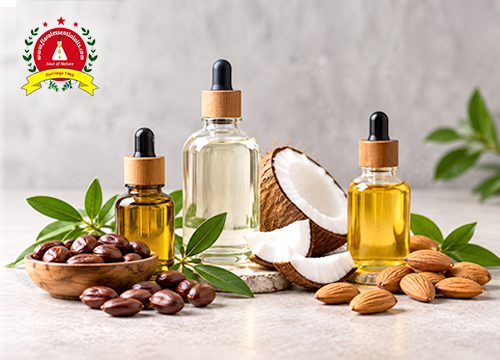
The best carrier oils for essential oils are the ones that match your skin, your purpose and your budget. Jojoba suits the face, fractionated coconut suits roll-ons, and sweet almond suits massage. This guide compares 13 carriers side by side, then shows you how to choose, dilute and store them.
Key takeaways
- A carrier oil dilutes essential oils so they can be used safely on skin and hair.
- Light, fast oils (fractionated coconut, jojoba, rosehip) suit the face and oily skin.
- Rich, slow oils (avocado, wheat germ) suit dry skin and hair ends.
- Sweet almond, sesame and fractionated coconut are good value for everyday use.
- Dilution math is simple: 1 ml holds about 20 drops, so 2% equals 4 drops per 10 ml.
- Store carriers cool and dark. Rosehip and wheat germ spoil fastest.
What is a carrier oil and why do you need one?
A carrier oil is a plant oil, usually pressed from seeds, nuts or kernels, that “carries” essential oils onto the skin. Essential oils are highly concentrated. Therefore, using them neat can cause redness, itching or long-term sensitivity.
Carrier oils solve this in three ways. First, they dilute the essential oil to a safe strength. Second, they help it spread evenly over a larger area. Finally, most carriers bring their own benefits, such as softness, slip and moisture.
Unlike essential oils, carriers have little or no scent and do not evaporate. That is also why a carrier can go rancid, while a pure essential oil oxidizes instead.
Best carrier oils for essential oils: side-by-side comparison
The table below compares the carriers we stock, plus castor and olive oil for reference. Comedogenic ratings (0 = unlikely to clog pores, 5 = very likely) are informal, commonly cited values. As a result, treat them as a rough guide rather than a lab result.
| Carrier oil | Absorption | Comedogenic | Shelf life* | Best for | Scent |
|---|---|---|---|---|---|
| Jojoba | Medium-fast | 1–2 | 3+ years | Face, all skin types, beard | Faint (clear) to nutty (golden) |
| Fractionated coconut | Fast | 1–2 | 2+ years | Roll-ons, hair, massage | None |
| Sweet almond | Medium | 2 | About 1 year | Massage, dry body skin | Very mild |
| Apricot kernel | Medium-fast | 2 | About 1 year | Normal skin, facial massage | Very mild |
| Argan (virgin) | Medium | 0 | 1–1.5 years | Face, hair ends, tattoos | Light, nutty |
| Rosehip | Fast | 1 | 6–12 months | Night face oil, uneven tone | Earthy |
| Avocado | Slow | 3 | About 1 year | Very dry skin, hair masks | Green, earthy |
| Sesame | Medium | 3 | 1–2 years | Body and Ayurvedic massage | Mild, nutty |
| Neem | Slow | 1–2 | 1–2 years | Scalp blends, garden sprays | Strong, bitter |
| Wheat germ | Slow | 5 | 6–12 months | Rich body blends (add up to 10%) | Grainy |
| Carrot (macerated) | Medium | Varies with base | About 1 year | Mature or sun-tired skin | Earthy |
| Castor (not stocked) | Very slow | 1 | 2+ years | Lashes, brows, cleansing blends | Faint |
| Olive (not stocked) | Slow | 2 | 1–2 years | Dry body skin, DIY balms | Fruity, strong |
*Approximate, for sealed bottles stored cool and dark. Opened bottles age faster.
How to choose a carrier oil by skin type
When choosing the best carrier oils for essential oils, skin type matters more than any ranking. Also, a carrier that suits your legs may feel heavy on your face. Use these starting points, then trust how your skin responds over two weeks.
Oily and acne-prone skin
Choose light oils with low comedogenic ratings. Jojoba is a favorite, because its wax esters resemble skin’s own sebum. Rosehip and argan are also good options. Our guide to carrier oils for oily skin covers this in more detail. However, avoid wheat germ and avocado on the face.
Dry and mature skin
Dry skin loves richer oils. Avocado and sweet almond cushion the skin, while rosehip and carrot macerated oil are traditionally used in night blends for tired, uneven-looking skin. For more ideas, see our post on the benefits of rosehip oil. Also, apply oils to slightly damp skin to lock in moisture.
Sensitive skin
Keep it simple: one carrier, few or no essential oils, and a 0.5–1% dilution at most. Fractionated coconut and jojoba clear are good choices, because they are nearly odorless. In addition, always patch test for 24 hours first.
Dark elbows and knees: can coconut oil help?
Many people ask whether coconut oil can lighten elbows. There is no strong evidence that any oil lightens skin. However, dry, rough skin often looks darker, so regular moisturizing may improve the look over time. Pair a light oil with gentle exfoliation and sunscreen. Our guide to essential oils for dark elbows and knees shares simple routines. If darkening spreads or appears suddenly, see a doctor.
Best carrier oils for hair and scalp
Hair needs a different approach from skin. For example, a light oil works on fine hair, while thick or curly hair can handle richer carriers. Also, the scalp is skin, so the same dilution rules apply.
Is fractionated coconut oil good for hair?
Yes, for many people. Fractionated coconut oil stays liquid, feels light and washes out easily. As a result, it works well as a pre-wash treatment or a drop of shine on the ends. It lacks some of the heavier fats in virgin coconut oil, however, so very dry hair may want something richer. Read more in our guide to fractionated coconut oil for hair and skin.
Olive oil for dandruff: does it help?
Olive oil can soften and loosen visible flakes before shampooing. That said, there is little evidence it treats the causes of dandruff. In some people, heavy oils may even make an oily, flaky scalp worse. Our post on olive oil as a dandruff remedy explains how to try it carefully. If flaking persists, see a dermatologist.
Other good hair carriers
Argan and jojoba suit most hair types. Avocado is rich enough for deep-conditioning masks, while neem is traditionally used in scalp blends despite its strong smell. For a short list, see our four favorite carrier oils for hair, or dive into the benefits of avocado oil.
Budget vs premium carrier oils
The best carrier oils for essential oils are not always the most expensive. In fact, the cheapest carrier oils are often the most versatile, because you use them in larger amounts.
Best value carriers
Sweet almond, sesame and fractionated coconut are the everyday workhorses. They suit massage, body oils and bath blends. Sunflower and olive oil from the kitchen also work in a pinch, although their scent and shelf life vary. For more ideas, read our list of cheap carrier oils for radiant skin.
When premium is worth it
Rosehip, argan and jojoba cost more. However, you use only a few drops on the face, so a bottle lasts a long time. Our deep dives into lesser-known uses of jojoba oil and argan carrier oil benefits explain why they earn their price. A smart approach is to use a budget carrier for the body and a premium one for the face.
Buying for a spa, salon or product line? Every carrier we sell comes in nine pack sizes, from 250 ML up to 25 L.
How to mix the best carrier oils for essential oils
Once you have chosen a carrier, the next step is the math. Fortunately, one rule covers almost everything: 1 ml of essential oil is about 20 drops. Therefore, the formula is simple.
Drops of essential oil = ml of carrier × dilution % × 20 ÷ 100. For example, 30 ml × 2% × 20 ÷ 100 = 12 drops.
| Dilution | 10 ml | 30 ml | 50 ml | Use it for |
|---|---|---|---|---|
| 0.5% | 1 drop | 3 drops | 5 drops | Children 6+, very sensitive skin |
| 1% | 2 drops | 6 drops | 10 drops | Face, daily use |
| 2% | 4 drops | 12 drops | 20 drops | Body oils and massage |
| 3% | 6 drops | 18 drops | 30 drops | Short-term use on small areas |
The best carrier oil for tea tree oil
Tea tree is often used on blemish-prone skin, so a light carrier makes sense. Jojoba and fractionated coconut are good matches. You can also mix tea tree oil with olive oil for body use. Keep it to about 1% on the face and 2% elsewhere.
Matching essential oils to carriers
Heavy carriers can mute delicate florals, while light carriers let them shine. As a rule, use jojoba or fractionated coconut for floral and citrus blends, and sesame or sweet almond for warming, woody massage blends.
Special uses: massage, tattoos, piercings and more
Massage
For massage, you need slip and time before the oil sinks in. Sweet almond, sesame and apricot kernel are the classics. In addition, a 10% splash of wheat germ adds richness and natural vitamin E.
Tattoos
Once a tattoo has fully healed, a light oil can keep the skin soft and the colors looking fresh. Argan is a popular choice; see our guide to argan oil for tattoos. However, follow your artist’s aftercare while the tattoo is still healing.
Piercings and vitamin E oil
Most professional piercers recommend sterile saline for fresh piercings, not oils. Oils may trap debris in a healing wound. Our article on vitamin E oil for piercings weighs the pros and cons. For bumps or signs of infection, speak to your piercer or a doctor.
Noses and open wounds
Searches for castor oil in the nose are common. However, do not put oils inside the nostrils without medical advice, because rare cases of oil entering the lungs have been reported. Similarly, keep carriers and essential oils off open wounds and burns.
Storage, shelf life and how to spot rancid oil
Carrier oils are fats, so air, light and heat slowly turn them rancid. Rancid oil smells like crayons, old nuts or paint. Moreover, it can irritate the skin, so it is worth checking.
- Store carriers in dark glass or opaque bottles, tightly capped.
- Keep them cool. Rosehip and wheat germ last longer in the fridge.
- Write the opening date on every bottle.
- Smell before each use, and discard any oil that smells sharp or stale.
Jojoba and fractionated coconut are the most stable choices. As a result, they are ideal for roll-ons and blends you plan to keep for months.
Carrier oil safety and allergies
Even the best carrier oils for essential oils are not risk-free. Research suggests some plant oils may support the skin barrier, while others may not suit every skin; this review of topical plant oils is a useful overview. Keep these points in mind:
- Nut and seed allergies: sweet almond, apricot kernel, argan and sesame may not suit people with related allergies. Fractionated coconut or jojoba are common alternatives.
- Wheat germ may not suit people who react to wheat.
- Patch test every new carrier and blend on the inner arm for 24 hours.
- Citrus caution: cold-pressed bergamot, lemon, lime and grapefruit can cause sun reactions, even when diluted.
- Children and pregnancy: use 0.5–1% for children aged 6 and over, avoid most essential oils under age 2, and ask your doctor during pregnancy.
- Pets: cats are especially sensitive to essential oils, so do not apply blends to pets.
- No ingestion: our carriers and essential oils are sold for external use only.
Frequently asked questions
Can coconut oil lighten elbows?
There is no strong evidence that coconut oil, or any carrier oil, lightens skin. However, dry, rough elbows often look darker than they are. Moisturizing daily, exfoliating gently once or twice a week and using sunscreen may improve their appearance over time. If dark patches spread, feel velvety or appear suddenly, see a doctor to rule out an underlying cause.
Is fractionated coconut oil good for hair?
Yes, it suits many hair types. Fractionated coconut oil is light, stays liquid and washes out easily, so it works as a pre-wash treatment or a smoothing drop on the ends. It is less rich than virgin coconut oil, however. People with very dry or thick hair may prefer argan or avocado oil for deeper conditioning.
What is the cheapest carrier oil?
Sweet almond, sesame and fractionated coconut are usually the best-value carriers for everyday use. Kitchen oils such as sunflower or olive also work, although their scent and shelf life vary. Cost per use matters more than bottle price. For example, a small bottle of jojoba lasts months when you only use a few drops on your face.
Can you ingest fractionated coconut oil?
Do not ingest fractionated coconut oil sold as a cosmetic carrier. It is packed and labeled for external use, not as a food. MCT oil sold for cooking is a different, food-grade product with its own standards. Likewise, never swallow carrier oils that contain essential oils. If you want MCT oil as a supplement, choose a food-grade product and ask your doctor.
Does olive oil help with dandruff?
Olive oil can soften and loosen flakes before you shampoo, which may make them less visible. However, there is little evidence it treats the causes of dandruff, and heavy oils can worsen an oily, flaky scalp for some people. Try it only occasionally, wash it out well, and see a dermatologist if flaking or itching persists.
Is vitamin E oil good for piercings?
Not for fresh piercings. Most professional piercers recommend sterile saline, because oils may trap debris in a healing wound. Some people use a little vitamin E oil once a piercing has fully healed, to soften the skin. If you notice a bump, swelling, heat or discharge, speak to your piercer or a doctor rather than treating it with oil.
What is the best carrier oil for tea tree oil?
Jojoba and fractionated coconut are the most popular carriers for tea tree oil, because they are light and suit blemish-prone skin. Sweet almond and olive oil also work well for body use. Use about 1% on the face, which is 2 drops per 10 ml, and about 2% on the body. Always patch test a new blend first.
Find your perfect carrier oil
Jojoba, fractionated coconut, sweet almond, rosehip and more, each in nine pack sizes from 250 ML to 25 L. From a Kannauj manufacturer and exporter since 1962.
This article is for educational purposes only and is not medical advice. It is not intended to diagnose, treat, cure or prevent any condition. Consult a qualified healthcare professional before use, especially if pregnant, nursing or managing a skin condition. Essential oils are for external use only when properly diluted.



 Chat with us !