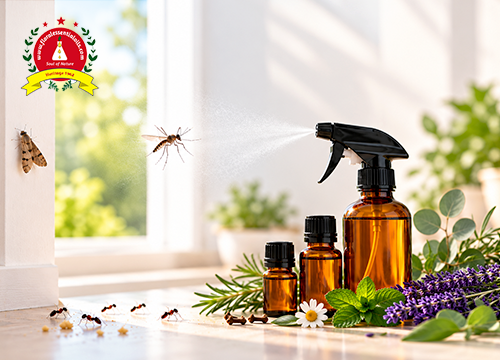
Essential oils for pest control can keep many bugs at a distance, but only if you match the right oil to the right pest and use it the right way. This guide sorts everything by pest, from mosquitoes and ants to clothes moths, slugs and aphids. In addition, it gives you simple recipes, safe dilution rates and an honest note on where oils fall short.
Key takeaways
- Essential oils mostly repel pests rather than kill them, and the effect fades as the scent evaporates.
- Oil of lemon eucalyptus (OLE/PMD) is the plant-based repellent registered by the EPA. However, plain lemon eucalyptus essential oil is a different, unregistered product.
- Cold-pressed neem oil is the garden workhorse for aphids and other soft-bodied insects. For slugs and snails it mainly deters rather than kills.
- Always dilute: about 2–3% for adult skin, 0.5–1% for garden sprays, and spray plants at dusk to protect bees.
- Many oils are toxic to cats, and birds should never share a room with a diffuser.
- In areas with malaria, dengue, Zika or Lyme disease, use an EPA-registered repellent instead of a DIY blend.
How essential oils for pest control actually work
Most insects find food, mates and shelter by smell. Strong aromatic molecules, such as citronellal, menthol and eugenol, can mask or scramble those signals. As a result, a pest may simply turn away from a treated surface or a treated arm.
That is a repellent effect, not a kill. Some oils do harm insects in lab tests, but only at doses that are rarely safe at home. In addition, oils are volatile, so protection usually fades within an hour or two. Timing and reapplication therefore matter more than the exact number of drops.
Quality matters too, because old or diluted oils carry fewer active molecules. Our explainer on cold-pressed versus steam-distilled oils explains why, and our technical information page lists typical specs.
Pest-by-pest guide: which essential oils for pest control work where
The quickest way to get results is to start with the pest, not the oil. Each pest responds to different scents and needs a different method. The map gives the short version, and the table adds realistic expectations.
| Pest | Oils most often used | Best method | Realistic expectation |
|---|---|---|---|
| Mosquitoes | Lemon eucalyptus, citronella, geranium, lemongrass | Diluted skin blend; patio spray | Up to 1–2 hours of reduced bites; reapply often |
| Ants | Peppermint, clove, sweet orange | Wipe scent trails and entry points | Breaks trails; does not reach the nest |
| Cockroaches | Peppermint, clove, rosemary | Wipe cracks, under sinks | Mild deterrent; baits and hygiene do the real work |
| Flies | Lemongrass, lavender, spearmint | Doorway spray, scented strips | Fewer flies near treated spots only |
| Clothes moths | Cedarwood, lavender, vetiver, patchouli | Sachets in closed storage | Deters adults; does not kill eggs or larvae |
| Spiders | Peppermint, lemon-scented oils | Window frames and corners | Weak and inconsistent |
| Mice | Peppermint | Cotton balls near gaps | Weak; mice get used to the smell |
| Slugs and snails | Cold-pressed neem | Leaf and soil spray, plus barriers | Some deterrence; few direct kills |
| Aphids, whitefly, mites | Neem, rosemary | 0.5–1% foliar spray at dusk | Good on young, soft-bodied pests with repeat sprays |
| Fleas and ticks on pets | None without vet advice | Vet-approved products | Oils can poison cats and small dogs |
Mosquitoes and biting insects: skin blends and room sprays
Mosquitoes hunt using carbon dioxide, body heat and skin odor. A strong-smelling oil on the skin can mask that odor for a while, so fewer of them land.
Oil of lemon eucalyptus vs lemon eucalyptus essential oil
This is the most important point in this guide. The US Environmental Protection Agency lists oil of lemon eucalyptus (OLE) and its active compound PMD as registered repellent ingredients. You can check the list on the EPA insect repellents page.
However, registered OLE products are refined to a high PMD content. Plain lemon eucalyptus essential oil, in contrast, is mostly citronellal with very little PMD. So a DIY blend may help a little, but it is not the registered product.
Do not use OLE or PMD products on children under 3 years old, and do not use homemade lemon eucalyptus blends on babies or toddlers. Ask your pediatrician which registered repellent to use.
Citronella, geranium and lemongrass
In small studies, citronella may reduce bites, yet protection often fades in under an hour. Geranium and lemongrass share some of the same compounds, so they blend well with it. For more on the herb, see our guide to lemongrass essential oil benefits.
Indoors, a diffuser adds scent but does little against a determined mosquito. Instead, use screens, a fan and a light spray on doorframes. For a longer list of scents, read our post on essential oils for bug repulsion.
Ants, cockroaches, flies and spiders indoors
Indoor pests come in for food, water and shelter. Oils can make entry points less inviting, but they cannot fix a crumb trail or a leaking pipe. So always pair them with cleaning.
Ants
Ants follow scent trails laid by scouts. Wiping a trail with a peppermint or clove solution breaks that signal, so the line scatters. First, find the entry crack; then wipe it and the trail daily for a week. Our simple essential oil cleaning hacks show other easy surface wipes.
Cockroaches and flies
Lab studies suggest peppermint, clove and rosemary oils can repel cockroaches. In a real kitchen, however, results are modest, so gel baits, sealed food and dry surfaces do the main work. Flies, meanwhile, dislike herbal and lemony scents. A doorway spray with lemongrass and lavender may help, but covered food and emptied bins help far more.
Spiders
Peppermint is the oil most often suggested for spiders, although results are inconsistent. People also ask whether sandalwood repels spiders; there is no good evidence that it does. Instead, vacuum webs, seal window gaps and reduce the insects spiders eat.
Clothes moths and pantry pests: cedar sachets and smart storage
Moth damage comes from the larvae, which feed on wool, silk and cashmere in dark, undisturbed spots. Cedar has been used for generations to discourage adults from laying eggs, and cedarwood atlas oil gives a similar dry, woody scent. Lavender, vetiver and patchouli are traditional companions.
However, scents do not kill eggs or larvae already in a garment. So first wash, dry-clean or freeze damaged items for several days. Next, vacuum the closet and store clean clothes in sealed bags. Only then add sachets as a deterrent layer.
For pantry moths and weevils, oils will not rescue an infested bag of flour or rice. Throw it out, wipe the shelf with a weak clove solution, and store grains in airtight jars.
Mice and rodents: what essential oils can and cannot do
Peppermint-soaked cotton balls are a popular remedy for mice. Unfortunately, the evidence is weak, and mice quickly get used to the smell when food is nearby. Therefore, treat peppermint as a pleasant extra. Sealing gaps, storing food in hard containers and trapping are what work. For rats or a large infestation, call a pest professional.
Essential oils for pest control in the garden: slugs, snails and aphids
Neem has been used on Indian farms for centuries. Still, the garden also has bees, earthworms and tender leaves to protect, so gentle rates matter.
Does neem oil kill slugs and snails?
Here is a straight answer: neem oil is not a slug poison. Its key compound, azadirachtin, puts insects off feeding and disrupts their growth. Slugs and snails are molluscs, not insects, so that effect is weaker.
That said, many gardeners find neem-sprayed leaves are chewed less, at least until rain washes the coating off. So treat neem as a deterrent within a wider plan. Our dedicated post covers using neem oil to keep slugs out of your garden in more depth.
- Remove hiding places. Lift boards and thick mulch near seedlings, because slugs rest in damp spots by day.
- Hand-pick at night. A flashlight walk after rain removes more slugs than any spray.
- Add barriers. Copper tape, grit or wool pellets make crossing unpleasant.
- Spray neem at dusk. Apply a 0.5–1% emulsion to young leaves and soil, and repeat after rain.
Aphids, whitefly and spider mites
Neem works best on soft-bodied pests such as aphids, whitefly, mealybugs and mites. As a result, colonies usually shrink over one to three weekly sprays. A trace of rosemary oil can be added, but keep it very low because it can scorch leaves.
Protecting bees
Neem breaks down quickly in sunlight, yet it can still harm bees sprayed directly. Therefore, spray at dusk and avoid open flowers. For the wider picture, read about the environmental impact of essential oils.
Spray a few leaves and wait 48 hours before treating a whole plant. Seedlings and heat-stressed plants burn most easily.
Ajowan is a lesser-known option with a strong thyme-like scent. Our profile of ajowan essential oil and its traditional uses explains more.
Four DIY recipes using essential oils for pest control
Use clean, labeled spray bottles and make small batches, because emulsions separate and scents fade within weeks.
1. Room and doorway spray
Mix 20 drops lemongrass, 10 drops peppermint and 10 drops lavender into 10 ml high-proof alcohol or a cosmetic solubilizer. Then add 100 ml distilled water and shake before each use. Spray doorframes, ledges and bin lids, but never people, pets or food.
2. Adult skin repellent blend (about 3%)
Add 12 drops lemon eucalyptus, 4 drops geranium and 2 drops citronella to 30 ml fractionated coconut or jojoba oil. Patch-test on the inner arm for 24 hours first. Then apply to exposed skin, away from eyes and lips, and reapply every hour or two. This blend is for adults only, so never use it on children under 3.
Also, skip cold-pressed lemon, lime or bergamot in anything worn in the sun, because they can cause phototoxic burns. Our guide to carrier oils for skincare compares textures.
3. Garden neem spray (0.5–1%)
Stir 2–3 ml mild liquid soap into 1 liter warm water. Next, add 5–10 ml cold-pressed neem oil (1–2 teaspoons) and shake hard. Spray leaf tops, undersides and soil at dusk, every 7 days and after heavy rain. Finally, use the mix within a few hours, since it separates.
4. Cedar wardrobe sachets
Fill muslin bags with wood shavings or wool felt balls. Add 5–8 drops cedarwood atlas plus 2–3 drops vetiver or patchouli, let it dry for an hour, then tie. Keep sachets off delicate fabrics and refresh every four to six weeks.
Pets, children and bees: safety rules before you spray
Natural does not mean harmless. Concentrated oils can irritate skin, eyes and lungs, and some are toxic to animals.
Cats, dogs and birds
Cats lack liver enzymes that break down many aromatic compounds. As a result, tea tree, peppermint, clove, citrus and eucalyptus oils can build up and harm them. Never apply oils to a cat, and avoid spraying where cats groom or walk.
Concentrated tea tree has also poisoned small dogs, so ask your vet about fleas and ticks instead of using DIY blends. Birds have very sensitive lungs; never diffuse or spray near them. Our post on essential oils and pet wellness covers more.
Drooling, wobbling, vomiting or labored breathing after exposure need a vet straight away. Move the animal to fresh air and bring the bottle.
Children, pregnancy and indoor air
Keep bottles out of reach, because swallowing even a little can be dangerous for a child. Also, avoid peppermint and eucalyptus near young children’s faces, and ask your doctor before using blends in pregnancy. Diffuse for 30–60 minutes in a ventilated room, always leaving pets a way out. Our guide to essential oils for fresher indoor air covers diffuser habits, while what eucalyptus oil is used for explains that oil’s strengths and cautions.
When essential oils are not enough
Oils are a pleasant, low-impact first step for nuisance pests. However, they have clear limits:
- Disease-risk areas: where insects spread malaria, dengue, Zika or Lyme disease, use an EPA-registered repellent such as DEET, picaridin, IR3535 or registered OLE/PMD.
- Established infestations: bed bugs, termites, heavy cockroach problems and rodents need a licensed professional.
- Short protection: most oils fade within one to two hours.
If you develop a fever, spreading rash or joint pain after a bite, see a doctor promptly.
Frequently asked questions
Does neem oil kill slugs?
Rarely. Neem oil works mainly on insects, and slugs are molluscs, so direct kills are uncommon. However, leaves sprayed with a 0.5–1% neem emulsion are often chewed less, because the bitter coating deters feeding. For real control, combine dusk sprays with night-time hand-picking, copper tape and fewer damp hiding places.
Does neem oil kill snails or just repel them?
For snails, neem acts more as a repellent than a poison. Snails avoid treated leaves for a while, but rain and new growth reduce the effect. Therefore, reapply every seven days and after heavy rain. Also, remove snails by hand in the evening and protect pots with grit or copper bands.
What are the best essential oils for bugs and insect repellent sprays?
For flying insects, lemon eucalyptus, citronella, lemongrass and geranium are the most studied. For crawling pests, peppermint and clove are popular trail wipes. In the garden, cold-pressed neem is the main choice. Keep adult skin blends around 2–3%, and expect protection to fade within one to two hours.
Is lemon eucalyptus essential oil the same as oil of lemon eucalyptus (OLE)?
No. OLE is refined to a high level of PMD, and registered OLE/PMD repellents are listed by the EPA. Lemon eucalyptus essential oil is mostly citronellal with little PMD. It may repel insects briefly, but it is not a registered repellent. Neither should be used on children under 3.
Does sandalwood repel spiders?
There is no good evidence that sandalwood repels spiders. Peppermint is the oil most often suggested, although results vary between studies and species. For fewer spiders, vacuum webs regularly, seal window and door gaps, and reduce the insects spiders feed on. Oils can then add a mild extra deterrent.
Are essential oil pest sprays safe around cats and dogs?
Use great caution. Many oils, including tea tree, peppermint, clove, citrus and eucalyptus, can be toxic to cats, and concentrated tea tree has harmed small dogs. Never apply oils to pets or use DIY flea blends. Spray only where pets do not walk or groom, and keep birds away from diffusers.
How long does a natural bug repellent last on skin?
Most essential oil repellents protect for roughly one to two hours, and less in heat, wind or heavy sweating. Therefore, reapply regularly and cover up at dawn and dusk. If you are traveling where mosquitoes or ticks spread disease, choose an EPA-registered repellent tested for longer protection.
Stock up for pest season, from 250 ML to 25 L
Floral Essential Oils has supplied oils from Kannauj since 1962. Every oil in this guide comes in nine pack sizes, from a home garden bottle to farm-scale drums.
This article is for educational purposes only and is not medical, veterinary or professional pest control advice. Consult a qualified professional before using essential oils, especially around children, during pregnancy or with pets. Essential oils are for external use only when properly diluted; do not swallow them. In areas with insect-borne disease, use a registered repellent.
 Chat with us !