Excessive sweating (hyperhidrosis) affects about 3% of people and can be embarrassing and uncomfortable. Fortunately, nature provides essential oils for sweating that act as gentle natural remedies for excessive sweating. These oils have astringent, antibacterial, and calming properties that help regulate perspiration, tighten pores, and neutralize odor. For example, aromatherapy using lavender, tea tree, or rosemary oil (all known for their antimicrobial and soothing effects) can help reduce stress-related sweating. This guide lists the top 11 essential oils to help stop sweating, along with how to use them safely. Floral Essential Oils, a trusted provider of 100% pure organic oils, offers many of these oils to help you create effective DIY remedies.
Natural Remedies for Excessive Sweating
Hyperhidrosis can be triggered by heat, anxiety, hormones, or illness. Conventional treatments (prescription antiperspirants, Botox, iontophoresis) exist, but natural remedies for hyperhidrosis are a popular alternative. Herbal extracts like sage tea or supplements (sage, burdock root) may modestly reduce sweat. In aromatherapy, certain essential oils are prized for regulating perspiration and controlling odor. They can be applied topically (diluted in a carrier oil) or inhaled to promote relaxation (since stress can trigger sweating).
- Astringent oils (e.g. clary sage, cistus, bay laurel) tighten sweat pores and limit moisture.
- Antimicrobial oils (e.g. tea tree, lavender, lemon) kill bacteria that cause odor, so sweat smells fresher.
- Hormone-balancing oils (e.g. clary sage) can tone down sweat glands, while cooling oils (peppermint) give instant comfort.
- Relaxing oils (like lavender and bergamot) lower anxiety-induced sweating.
By incorporating these natural “sweating oils” into your routine (for example in a DIY spray or roll-on), you can help stop excessive sweating in a gentle, holistic way. Many of these oils are available at Floral Essential Oils, which specializes in pure botanical oils.
Natural essential oils can help manage excessive sweating by reducing odor and pore activity.
How Essential Oils Help Manage Hyperhidrosis
Excessive sweating (hyperhidrosis) is often worsened by stress, heat, or hormones. Essential oils target these factors: their antibacterial compounds keep sweat from smelling, their astringent nature constricts pores, and their calming aroma reduces stress triggers. For instance, clary sage oil contains sclareol, a natural antiperspirant, and also calms anxiety. Lavender and bergamot oils lower cortisol (stress hormone) levels, indirectly reducing stress-related sweat. And peppermint’s menthol gives a cooling feeling on sweaty skin.
When used properly, these oils complement medical treatments. A simple method is to mix a few drops of one or more sweating-controlling oils into a carrier oil (like jojoba or coconut) at ~1–3% dilution and rub on underarms, palms or feet after showering. You might also diffuse calming blends or add oils to a bath. Just remember to patch-test for sensitivity. The following section details the 9 best oils to try.
9 Best Essential Oils for Sweating
Each of the following essential oils offers unique benefits for reducing sweat and odor. Use them as spot treatments (dilute 2–3 drops in a teaspoon of carrier oil) or add to homemade deodorants. Be sure to avoid sun exposure with any citrus oils (e.g. lemon, bergamot, palmarosa) if applied to skin.
1. Clary Sage Essential Oil – Hormone & Sweat Regulator
Clary sage oil is top-rated for excessive perspiration. It contains sclareol, a compound with natural antiperspirant action. Clary sage not only reduces sweat production, but also calms nerves (linalool and linalyl acetate in the oil) to cut stress-related sweating. Its antibacterial effect also fights odor-causing microbes.
- Usage: Blend 3–4 drops of clary sage EO in 1 teaspoon jojoba or coconut oil; apply to armpits, feet or palms after showering. You can also inhale it on a tissue for calming relief.
- Caution: Avoid during pregnancy, breastfeeding, or with hormone-sensitive conditions. Always dilute first.
2. Palmarosa Essential Oil – Natural Deodorant Boost
Palmarosa (Cymbopogon martini) is known as a natural deodorant. It’s a broad-spectrum antibacterial oil (rich in geraniol) that helps eliminate the bacteria responsible for body odor. It also refreshes the skin with a gentle floral scent. Palmarosa is moisturizing too, so it can soothe irritated skin.
- Usage: Mix 3–4 drops palmarosa EO with carrier oil and rub onto sweaty spots (underarms, feet). You can also add a few drops to a homemade deodorant balm or spray.
- Benefits: Balances skin lipids and prevents odor without blocking pores.
3. Lemon Essential Oil – pH Balancer & Antiseptic
Lemon oil’s fresh citrus aroma isn’t just uplifting – its acidity can slightly change skin pH to discourage bacteria. A lower skin pH makes it harder for odor-causing microbes to thrive. Lemon oil is also antimicrobial and antifungal. This combo leaves skin smelling clean.
- Usage: Always dilute lemon oil heavily (photosensitivity risk) – e.g. 2 drops in a tablespoon of oil and apply to underarms or feet at night.
- Note: Avoid sun exposure on lemon-treated skin.
4. Lavender Essential Oil – Calming & Antibacterial
Lavender oil is one of the most versatile EOs. It has antibacterial and antiseptic properties that can prevent bacterial growth on skin, helping sweat to remain odorless. Its calming aroma also reduces anxiety-related sweating. According to Floral Essential Oils, lavender’s gentle, floral scent and calming effects make it a great base for natural deodorant blends.
- Usage: Dilute 3–5 drops of lavender in a carrier oil and apply underarms or on hot spots. Safe for sensitive skin.
- Bonus: Lavender also relaxes you, tackling both sweat and stress.
5. Tea Tree Essential Oil – Odor-Fighting Powerhouse
Tea tree oil is a potent antimicrobial. It eliminates many bacteria and fungi on the skin, which stops sweat from turning into odor. While it isn’t an antiperspirant per se, its germ-killing ability means sweaty areas stay fresher. It’s widely used in DIY deodorants for this reason.
- Usage: Mix 2–3 drops tea tree oil with 1 tsp coconut or sweet almond oil; apply to underarms, feet, or other odor-prone areas.
- Precaution: Only for external use; avoid if you have skin conditions like eczema.
6. Peppermint Essential Oil – Cooling Sweat Control
Peppermint oil’s high menthol content delivers an instant cooling sensation, which many find soothing on overheated skin. This cooling effect can make you feel less sweaty (especially on the forehead or neck). Peppermint is also antibacterial, helping control odor.
- Usage: Dilute 2–3 drops peppermint oil in a carrier (e.g. 1 tsp grapeseed oil) and apply to sweaty areas or temples for cooling relief. You can also inhale peppermint oil or use it in a personal diffuser for on-the-spot freshness.
- Tip: Great for sweaty palms or feet after exercise. Avoid eyes and sensitive skin.
7. Bergamot Essential Oil – Antibacterial and Calming
Bergamot oil (Citrus bergamia) has strong antibacterial qualities and a pleasant citrus fragrance. It can help control body odor-causing germs and its natural citrus freshness masks any faint smell. Bergamot is also mildly sedating, which may help reduce stress-induced sweating.
- Usage: Dilute 1–2 drops bergamot with a teaspoon of carrier oil and apply to armpits or add to a DIY roll-on.
- Caution: Contains bergapten (photosensitizing), so use only on non-exposed areas or at night.
8. Rose Geranium Essential Oil – Balances Skin & Odor
Geranium oil is widely used for oily or acne-prone skin because it balances sebum production. It is also an astringent, meaning it tightens pores and reduces sweating. Geranium’s sweet, rose-like aroma is both deodorizing and uplifting.
- Usage: Add 3–4 drops of geranium oil to 1 tsp carrier oil and apply underarms or feet daily. It works well in spray deodorant blends.
- Benefit: Helps prevent odor and keeps oily, sweaty skin in check.
9. Rosemary Essential Oil – Odor Blocker & Relaxant
Rosemary oil (cineole type) is antimicrobial and refreshing. It acts as an odor blocker while providing a herbaceous scent. By cleansing the skin and reducing germ activity, it indirectly helps control sweat odor. Its stimulating aroma can also ease mental fatigue, potentially reducing stress-sweating.
- Usage: Blend 3–4 drops rosemary oil with a carrier and apply to sweaty areas or use in a diffuser.
- Benefit: In addition to odor control, rosemary can improve circulation, which may help cool overheated skin.
How to Use These Oils for Sweating
- Dilute properly: Always mix 2–5 drops of essential oil per teaspoon (5 mL) of carrier oil (coconut, jojoba, sweet almond, etc.) before applying to skin. This prevents irritation.
- Spot apply: Focus on sweat-prone areas – underarms, chest, feet, palms, and even the back of the neck. Rub or spray the diluted oil blend after bathing.
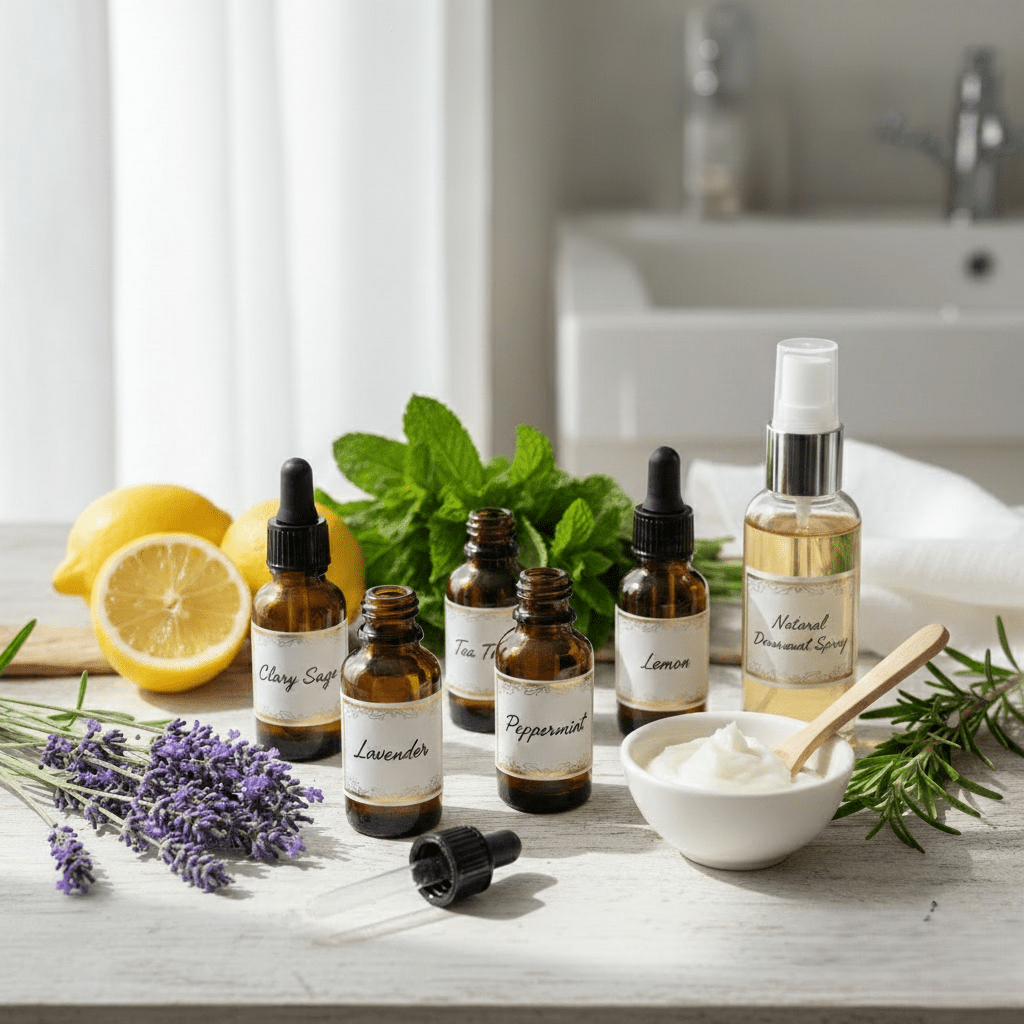
- DIY deodorant: Create a natural deodorant spray by combining 10–15 drops of a blend (e.g. tea tree, lavender, lemon) with 2 oz witch hazel or vodka. Shake well and spray underarms.
- Inhalation: Diffuse calming oils (lavender, bergamot) in your room to reduce anxiety. Low anxiety often means less stress sweating.
- Consistent use: Apply 1–2 times daily as needed. Consistency helps regulate your body’s response.
Safety & Precautions
- Patch test: Try any new oil on a small skin area first.
- Dilution: Never use neat (undiluted) essential oil on skin.
- Sun exposure: Avoid sun for 12–24 hours after applying citrus oils (lemon, bergamot, bay laurel).
- Avoid sensitive cases: Pregnant or nursing women, and people with certain conditions, should consult a doctor before use.
- Eye/mucus contact: Keep oils away from eyes and mucous membranes.
Conclusion
Excess sweat doesn’t have to be an uncontrollable nuisance. By using the 9 best essential oils for sweating, you can harness nature’s power to balance perspiration and odor. Oils like clary sage and geranium act as natural astringents, while lavender, tea tree, and lemon keep skin clean and fresh. And don’t forget the cooling breeze of peppermint or the stress-relief from bergamot to tackle sweat triggers. Floral Essential Oils offers these pure oils and expertise so you can create your own antiperspirant blends with confidence. Embrace these natural remedies for hyperhidrosis and enjoy dry, fresh comfort all day long.